 Español
 Français
 Português

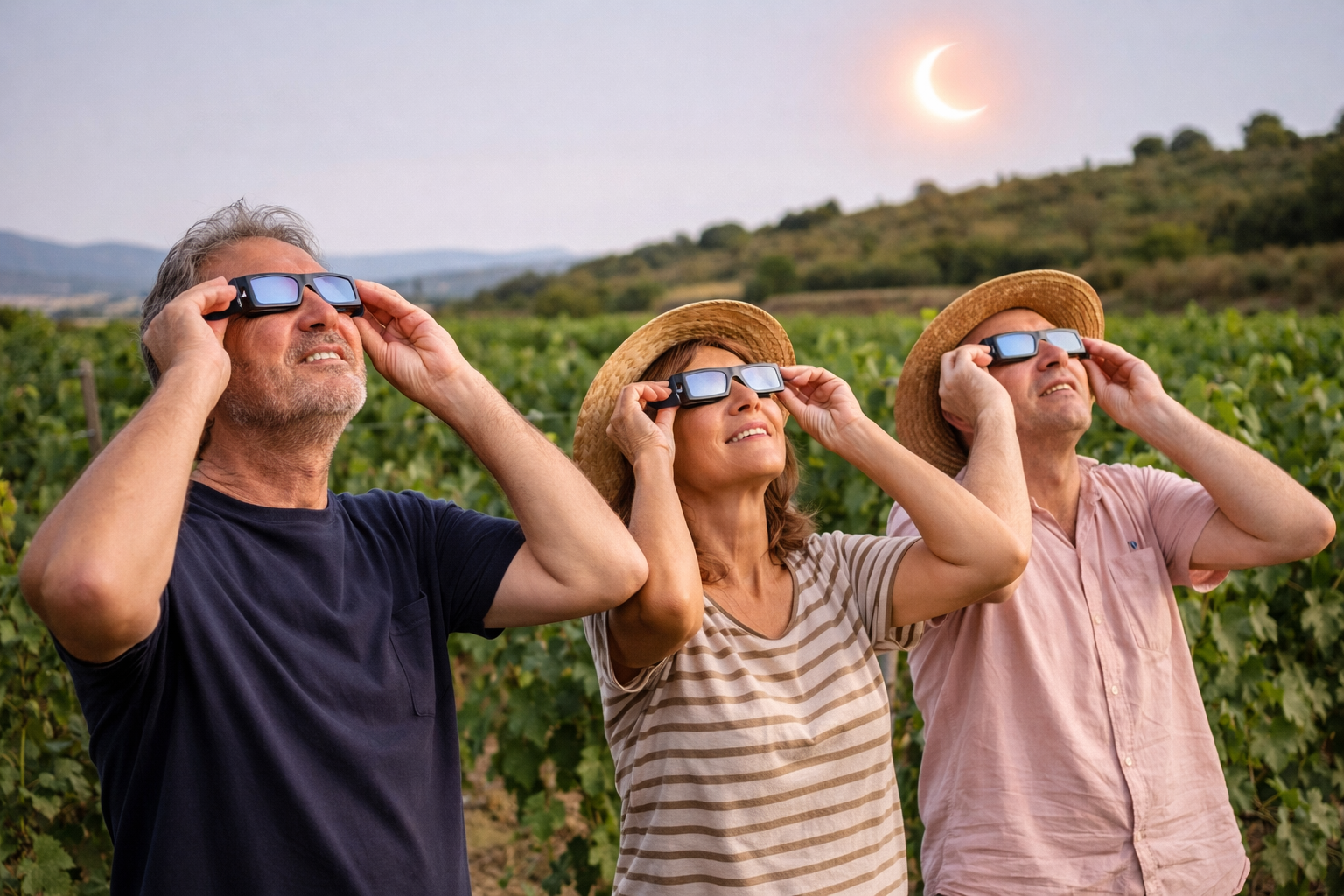
On 12 August, Spain will witness a much-anticipated astronomical phenomenon: a solar eclipse that will be visible across much of the country. Events of this kind not only spark curiosity but also excitement, as they allow us to witness first-hand how the Moon passes between the Earth and the Sun, transforming the sky for a few minutes into a unique spectacle.
Furthermore, those in areas such as La Rioja Alta will have a particularly privileged opportunity. Thanks to its geographical conditions and, predictably, clear summer skies, the eclipse will be visible with great clarity from many points in this region, making it an ideal moment both for astronomy enthusiasts and for those wishing to enjoy a unique experience in the heart of nature.
However, looking at the sun — even during an eclipse — is not safe without proper protection. This is where certified solar eclipse glasses come into play.
Firstly: not all sunglasses are suitable
- A very common mistake is to think that any sunglasses protect against looking directly at the sun. This is false.
- According to the standard, conventional sunglasses:
- ARE NOT designed for looking directly at the sun
- DO NOT adequately filter intense radiation (visible, UV and infrared)
- Only filters specifically designed for this purpose should be used for solar observation
1. Level of protection: the most important factor
Safe sunglasses for viewing the sun must allow an extremely low amount of light to pass through.
According to the document:
Maximum light transmittance: 0.0032%
Minimum light transmittance: 0.000061%
This means they block virtually all visible light, preventing damage to the retina.
Recommendation:
✔ Ensure the glasses are certified to ISO 12312-2
✔ Be wary of products without clear labelling
2. Complete protection against radiation
It is not enough simply to darken the image. The glasses must protect against:
Ultraviolet (UV) radiation
Intense visible light
Infrared radiation
The standard sets strict limits for each type of radiation.
Recommendation:
✔ Avoid makeshift filters (CDs, tinted glass, films, etc.)
✔ Use only filters certified for solar observation
3. Quality of the material and the lens
The lenses must be free from defects that could affect vision, such as:
- Scratches
- Bubbles
- Opaque or distorted areas
Furthermore:
Light transmission must be uniform across the entire lens
There must be no differences of more than 10% between areas
Recommendation:
✔ Visually inspect the glasses before use
✔ If you see any defects, do not use them
4. Design and fit: safety is also about ergonomics
The filter or glasses must:
- Completely cover both eyes
- Stay securely in place (without risk of falling off)
- Have no sharp edges or irritating materials
Recommendation:
✔ Choose glasses that fit your face well
✔ Avoid fragile or poorly assembled designs
5. Mandatory labelling and warnings
A safe product must include:
- Manufacturer’s name
- Instructions for use
- Clear warnings about the risk of looking at the sun without protection
- Maintenance and shelf-life information
Recommendation:
✔ If there are no instructions or warnings → do not buy
✔ Check the date or condition of the product
6. Correct use: there are rules even when wearing glasses
Looking at the sun without protection can cause permanent damage
During an eclipse, protection must be worn whenever the sun is not completely covered
Also:
- Eye damage can be painless and take hours to become apparent
Recommendation:
✔ Do not look at the sun for long periods
✔ Do not use damaged glasses
✔ Do not use sunglasses with telescopes or binoculars without suitable filters
7. What you should NEVER use
According to the technical guide:
- Ordinary sunglasses
- Photographic film
- Tinted lenses
- CDs or DVDs
- Polarised or ND filters
Although they may appear to darken the view, they do not actually provide protection
Conclusion: it is possible to view the sun safely
Observing an eclipse or the sun can be an incredible experience, provided it is done responsibly.
The key is choosing the right glasses:
- ISO 12312-2 certification
- High protection (ultra-low transmittance)
- Good optical quality
- Clear labelling
Investing in suitable glasses is not a whim: it is a matter of eye health.
