Ruta del Vino Rioja Alta
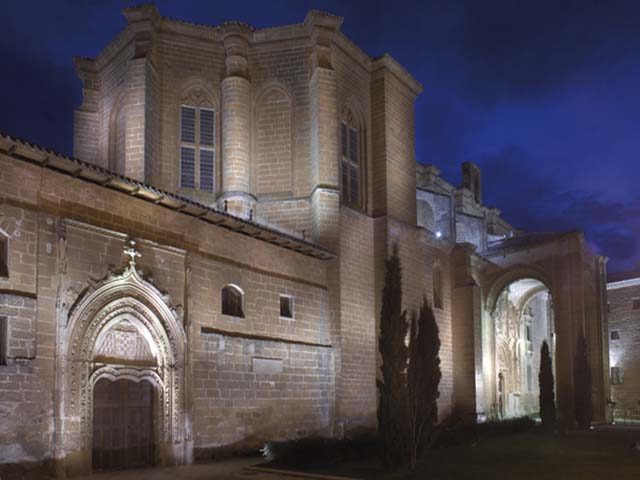
Declared a national historic-artistic monument. In 1509, Don Juan de Velasco, Bishop of Calahorra and La Calzada, obtained permission from Pope Julius II to found a monastery in Casalarreina. Construction began in 1514 and was completed in 1524, with the intervention of great masters such as Juan de Rasines and Felipe Virgany. It was inaugurated in 1522 by Adrian VI. The monastery complex, inhabited by cloistered contemplative Dominican nuns since its foundation, is made up of the different cloistered rooms and the church, accessed through a rich Plateresque doorway with 4 pointed archivolts. CHURCH It has a large nave with five bays, with chapels between the buttresses and a large main chapel with transept arms and an octagonal chancel. The main doorway opens in the third bay and is protected by a portico in a small temple covered with a dome on pendentives; the decoration of its columns is profuse with plant motifs, human and mythological figures. The doorway resembles an altarpiece, with the lower section in the form of a triumphal arch and entrance under a lintel, flanked by the figures of Adam and Eve on pilasters. The tympanum depicts a representation of the Pietà, with a pelican, symbol […]
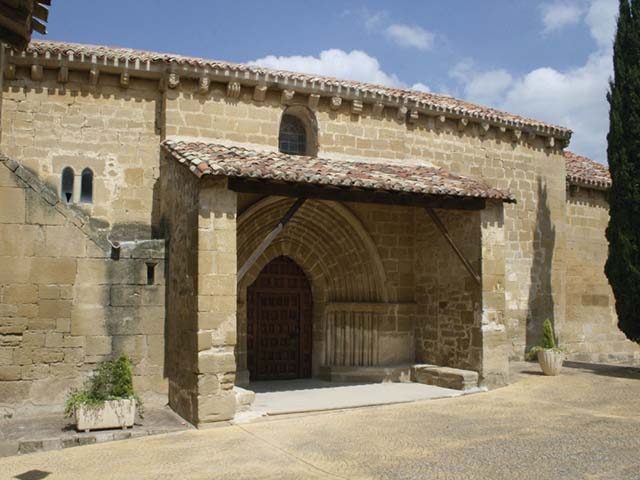
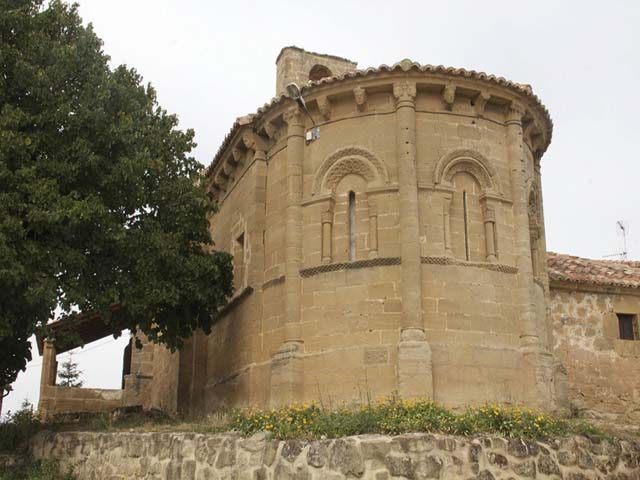
The parish church of Ochánduri is dedicated to the Conception of the Virgin and is one of the best examples of sculpture in the River Tirón area. It stands at the northeast end of the hamlet, which it dominates. The church was restored in 1991, leaving its chevet free to the interior as the altarpiece was relocated to the foot of the church. The chevet, part of the nave and its magnificent southern doorway remain from the original stage of the church, with the roofs dating from the late 17th century, as well as a large part of the nave. The apse of Ochánduri is one of the most perfect of the Riojan churches. Built with good ashlar stone in which we can see different stonework marks, it has four semi columns attached to it that divide it into five sections. In the central one, there is a recessed embrasure decorated with an archivolt supported by small columns with their bases and capitals. The archivolt is decorated with a small arch in the angle, flanked by scotias. The outside of the archivolt is decorated with pointillist decoration. The capitals show figures dancing, holding one ankle and rolling up their sleeves […]
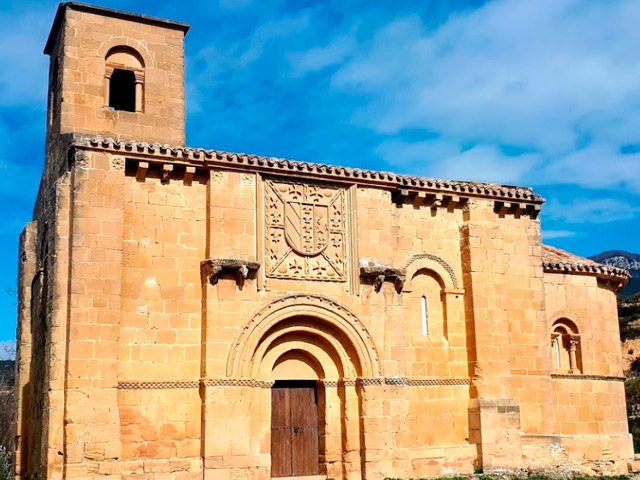
The complex is one of the artistic treasures of the region. It was built in 1136 in Romanesque style with a single nave. It was ordered to be built by D. Ramiro Sanchez in memory of his participation in the First Crusade, in which he took part by entering Jerusalem through the door of the Piscina Probática. The monumental sculpture in this church is varied. The windows are decorated with checkerwork, balls, flowers inscribed in circles, and vegetal and historiated capitals. The façade has balls, nailheads and mosaics. Several decorated corbels have been preserved. Next to the hermitage, there is a medieval necropolis of repopulation, a settlement with semi-rural dwellings and the remains of fortifications or watchtowers.
The church of San Román is probably the best and most complete example of Calceta’s Romanesque style. It consists of a chevet with an apse and a nave divided into three bays. Added to this basic layout is the tower of a fortress converted into a bell tower and a beautiful Renaissance chapel from the 16th century, attached to the north wall of the first section, with a semicircular barrel vault. Inside the church there are three pairs of double columns supporting sash arches, one of them the triumphal arch, following the Calceat model. The quarter sphere vault of the apse is supported by two rectangular section ribs that, on one side converge in the keystone, while on the other they rest on two columns, which divide the apse into three sections. Each of these sections has a window to illuminate the presbytery.
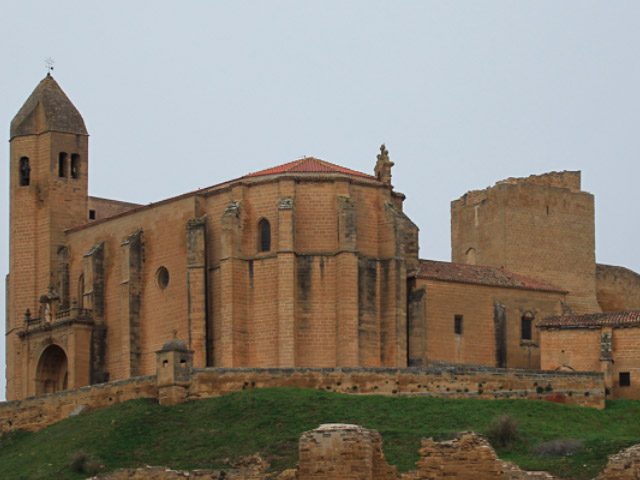
The Castle of San Vicente is located on the top of the hill overlooking the Ebro. It was once the largest fortress in Navarre built near the river, forming part of the defensive line of Laguardia and Labastida. It was built from 1170 or 1172 under the direction of Ferrant Moro, by order of Sancho the Wise of Navarre, who, in 1172, gave the town a charter, making it royal. The solidity of its walls and its advantageous position overlooking the Ebro must have made it impregnable. It lost its military interest after 1512, when the kingdom of Navarre became part of Castile, and in 1516 it was sold by Pedro Girón, Count of Ureña, to the Velasco family. Therefore, when the parish church was built, it had already lost its military function, recovering it in the 19th century, when it was used during the first Carlist war (1833-1840). After 1898, with the collapse of part of the walls and the use of its stone for construction, the complex was systematically demolished. During the second half of the 20th century, several attempts were made to restore and recover it. It is a typical castle-fortress built on a hill, an old […]
The hermitage of San Juan or Santo Cristo de los Remedios is a beautiful building with a centralised structure located in the centre of the historic quarter of Briones. It was built between 1737 and 1748 on the site of the old hermitage of San Juan. On the façade there is a niche with the image of San Juan, the patron saint of the original church. The hermitage we can see today was built by the master builder Juan Bautista Arbaizar, assisted by his son-in-law Ignacio de Elejalde. It is remarkable for its octagonal plan inscribed in a rectangle and its large central dome. Inside, altarpieces, paintings and carvings from the period are preserved. It is delimited by cylindrical buttresses and has a lintelled entrance with a mixtilinear moulding between Corinthian columns that support the entablature. In the second section there is a niche between pilasters with the typical mixtilinear moulding finials. The image that guards this niche reminds us that the chapel was built on top of the previous ruined chapel of San Juan Bautista. The façade ends with the single-egg belfry that crowns the whole. The three altarpieces in the chancel are 18th century Rococo style, with images […]
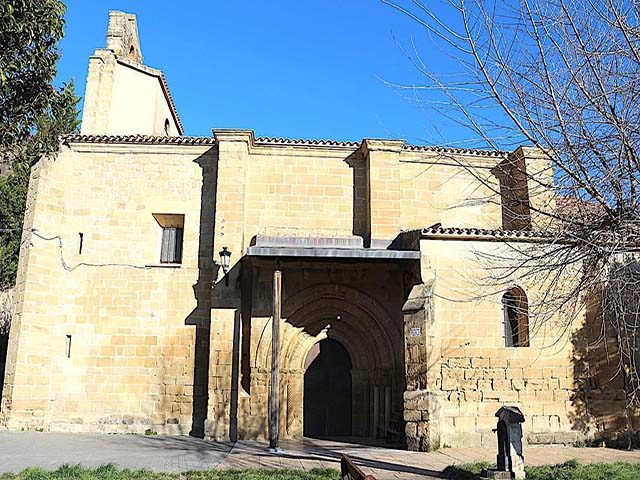
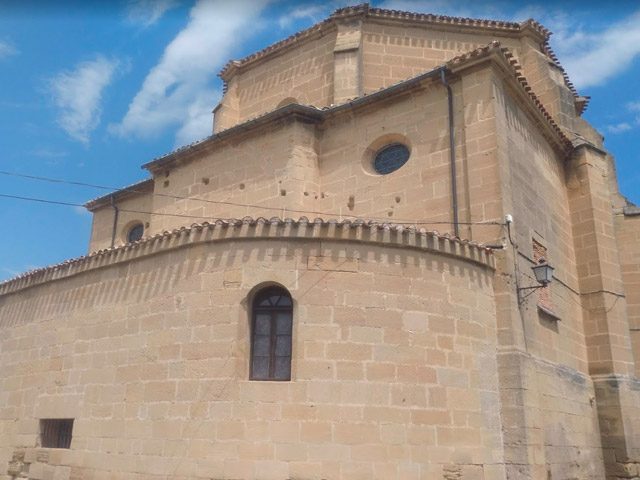
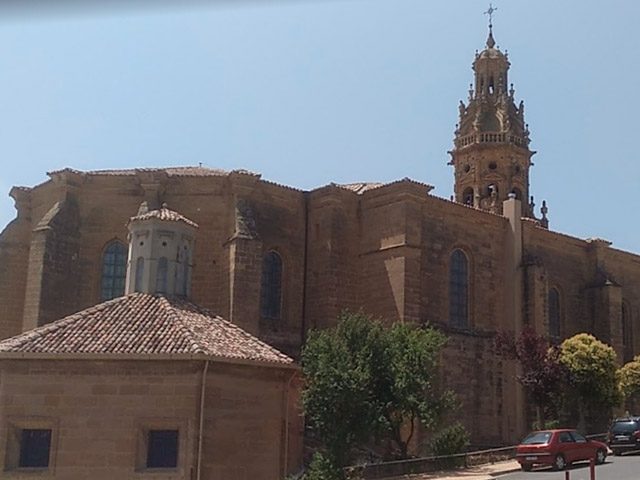
The parish church is a building in honour of Saint Thomas the Apostle and was declared an Asset of Cultural Interest on 4 June 1931. It is located at the foot of the hill of La Mota, the primitive nucleus of the town, currently known as “La Atalaya”, and was built on top of an earlier building made of ashlar stone. The German “hallen kirche” or hall plan is divided into three naves of equal height without transept with fifteen star-shaped ribbed vaults and different geometric arches over pointed arches and attached columns and pilasters. Inside, the choir and the altarpiece stand out. In the choir we can contemplate the seating from the end of the 17th century and the organ from 1798 by Domingo Garagalza and the great altarpiece of the main altar is the largest in the whole of La Rioja, dating from 1730 and was made of polychrome wood with great decoration that gives us the sensation of filling the whole space, the “Horror Vacui”. On the outside, it is worth highlighting the main doorway under an arch with scenes of Calvary and imagery of the Apostles and the Eternal Father together with the coats of arms […]
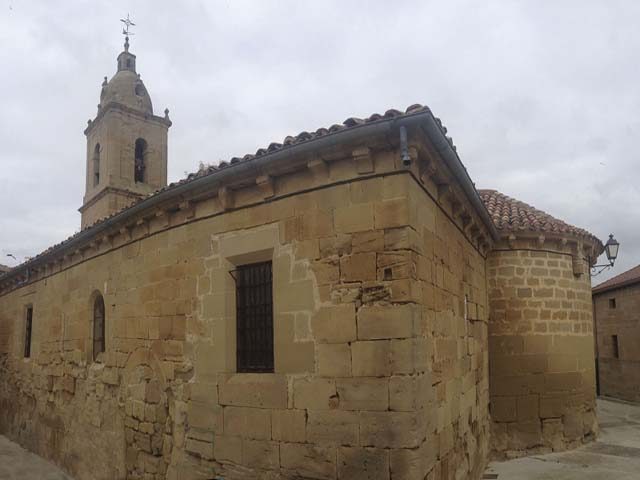
Like Sajazarra and Villaseca, Castilseco is located on the banks of the river Roganto and its name is related to the drying up of the marshy areas of the river in the 11th and 12th centuries, when it changed its name from Castriello to Castello Sicco or Castilseco. Construction of the church seems to have begun at the beginning of the 13th century, at least as far as the presbytery is concerned, and continued in another building stage with the nave. The church consists of a nave, an apse and an apse, the first two separated by a triumphal arch over which rises a belfry with a single opening. Another belfry with two openings rises above the west gable. On the outside, the apse is divided into five bays by four columns attached to a high plinth, which end in capitals with vegetal decoration, except for the second, which ends in a capital with two crowned heads. The carving of the faces, hair and expression anticipates Gothic aesthetics. The three central panels are the only ones with windows. The entire apse is crossed by two imposts, a chequered one at the start of the windows and a plain one that […]
It has an 11th century Romanesque apse, one of the oldest in the area. It preserves works of great value such as a Gothic crucifix and has been registered as an Asset of Cultural Interest in the category of Monument since 25th November 1980. The church has undergone several stages of construction from the primitive building of the late 11th or early 12th century, which consisted of a nave, a presbytery and an apse. Today it is only possible to see the apse from the outside, which still has the two capitals of the columns (possibly free-standing) that divided it into three sections, and the corbels that show motifs such as the sun and the moon, male and female faces and various animals (eagles, snakes, etc.). From the following construction stage, which consisted of the construction of a portico at the foot of the church and which took place in the middle of the 12th century, only one of the arches that serves as a shutter to the present-day narthex and another one that has been blinded are preserved. Still in the Romanesque period, in order to give the church the status of an abbey, two naves were built attached […]
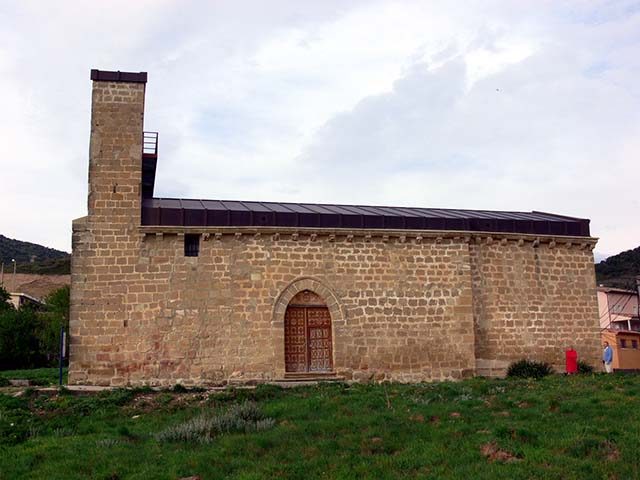
Temple with an elongated ground plan, with a simple rectangular roof, narrower than the base, with straight walls devoid of buttresses. On the east wall there is a lobed rose window. Both in its forms and in its doorway with a very acute arch, an advanced chronology of the 13th century can be appreciated, in a style of transition from Romanesque to Gothic. The eaves are supported by an interesting display of corbels, such as a lizard, a pair of quadrupeds, a man and woman paired together or a knight on his mount.
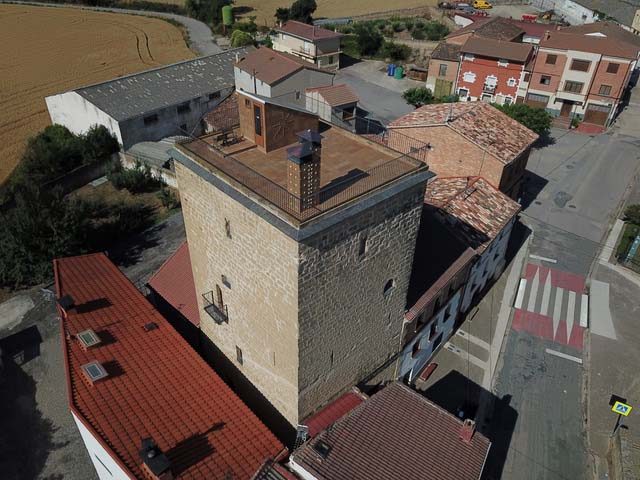
The Fortress Tower of Baños de Rioja was one of a series of fortresses that were scattered throughout the upper Rioja region to protect against raids and sieges at the time. At the beginning of the year 1200 (13th century), the López de Haro family, owners of the lordship of Vizcaya and founders of the town of Bilbao, ordered the construction of this fortress in Baños de Rioja. It originally had two towers, a wall, moat and defensive bastions and was topped with battlements. The keep, which is the one that remains standing today, has been declared a historical heritage site under Law 16/1985. Its characteristics correspond to the prototype of the Gothic tower in the region. It has thick ashlar walls (1.70 m thick), a rectangular floor plan (9.75 x 8 m), and is 19 m high. It still has all of its original arrow slits on the ground and second floors, windows with semicircular arches with stone seats on the sides on the first and third floors, and windows with mullioned windows on the fourth floor, as well as part of the mullioned windows of the defensive balcony on the first floor. Diego López III de Haro was […]
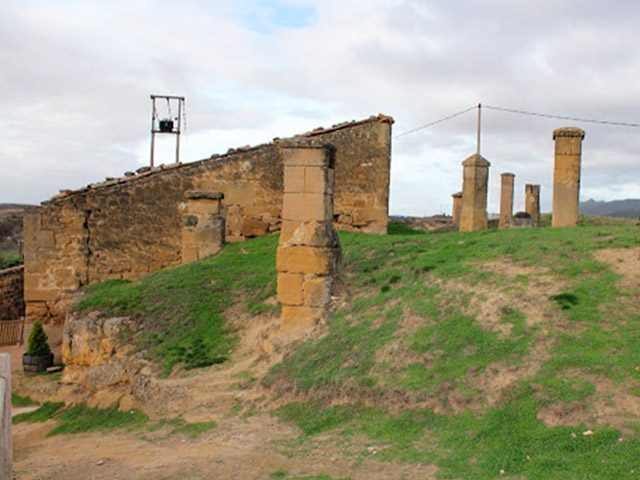
The more traditional cellars, known as “calaos” or “caves”, dug into the earth and sometimes into the rock itself, needed a solution so that the carbon dioxide gas emanating during the fermentation of the grapes, known as “tufo”, would not be stored inside them. On the hill in the Bodegas district, these small ashlar stone constructions stand out as chimneys, the “tuferas”, used to ventilate the cellars. They date from the 19th and 20th centuries.
 Español
 Français
 Português